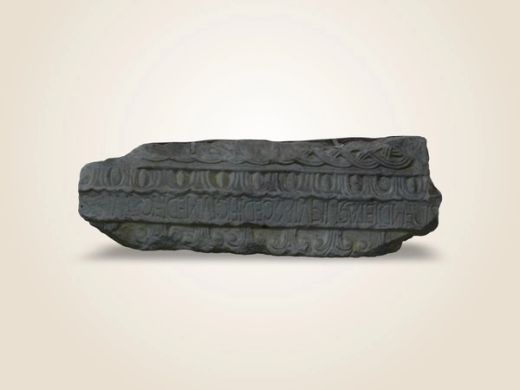
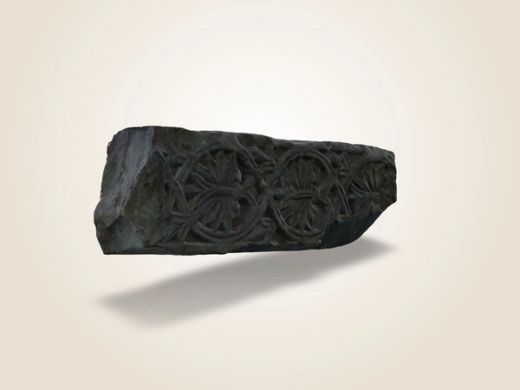
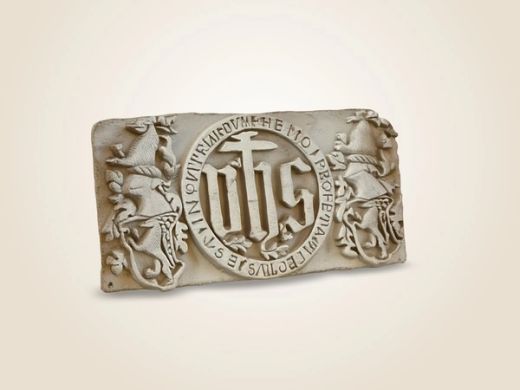
Ciborium arch
Luk ciborijuma
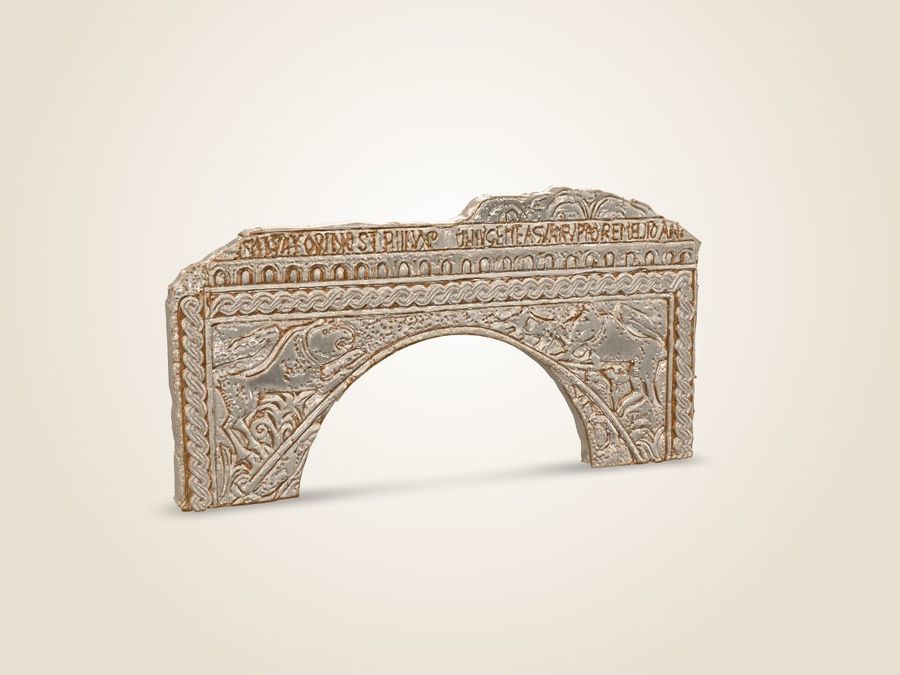
Drag to rotate · scroll to zoomDrag to rotate · pinch to zoom
loads {mb} MBObjects from Ulcinj now kept outside Ulcinj — 9th-century ciborium fragments in the National Museum in Belgrade. They were not scanned but reconstructed from photographs, so shape, ornament and size may differ from the original. A more accurate model is possible with better photographs or a 3D scan of the original.
Description
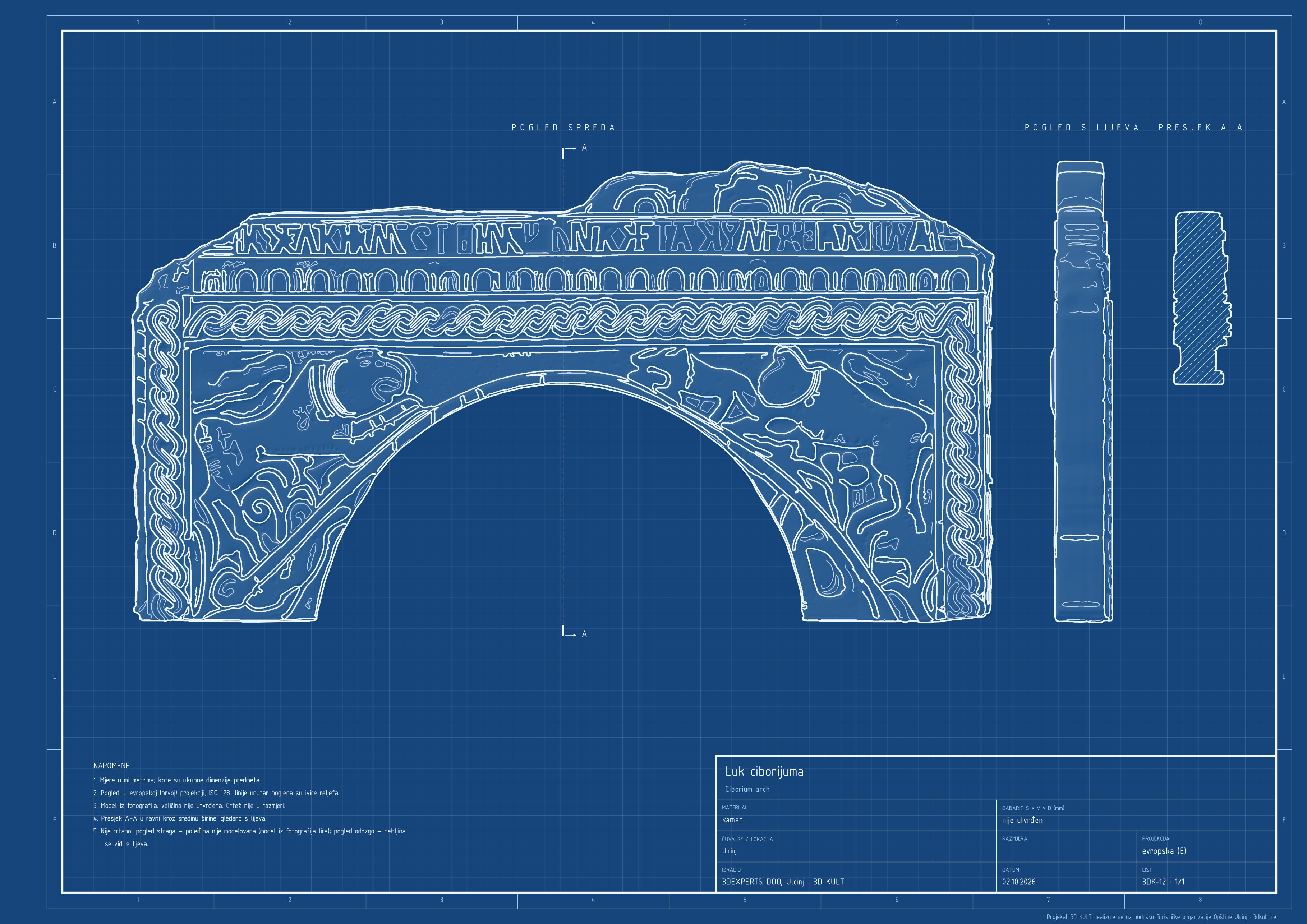
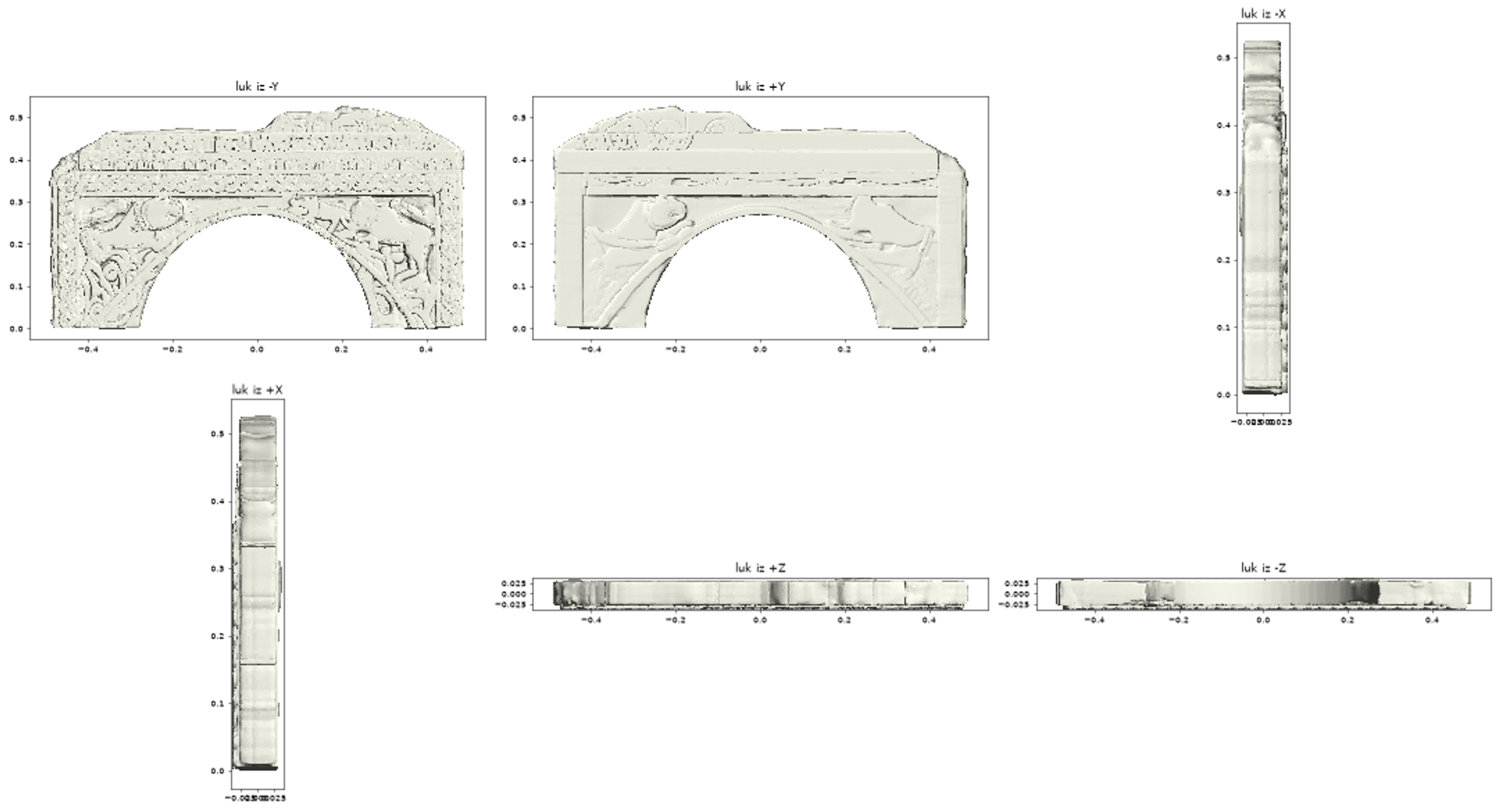
A reconstruction from photographs, not a 3D scan. The original — one side of the arch of the 9th-century Ulcinj ciborium — was taken from the Old Town to the National Museum in Belgrade around 1937, where it is still kept. The model was made from photographs only and may contain errors in shape, ornament and size; a more accurate model is possible with better photographs or a 3D scan of the original.
The arch of a ciborium, the stone canopy over an altar, as a 3D model made from photographs. The arch carries the same sequence of decorative bands as the scanned fragment of the Ulcinj ciborium: volutes, an inscription band, ovolo and interlace.
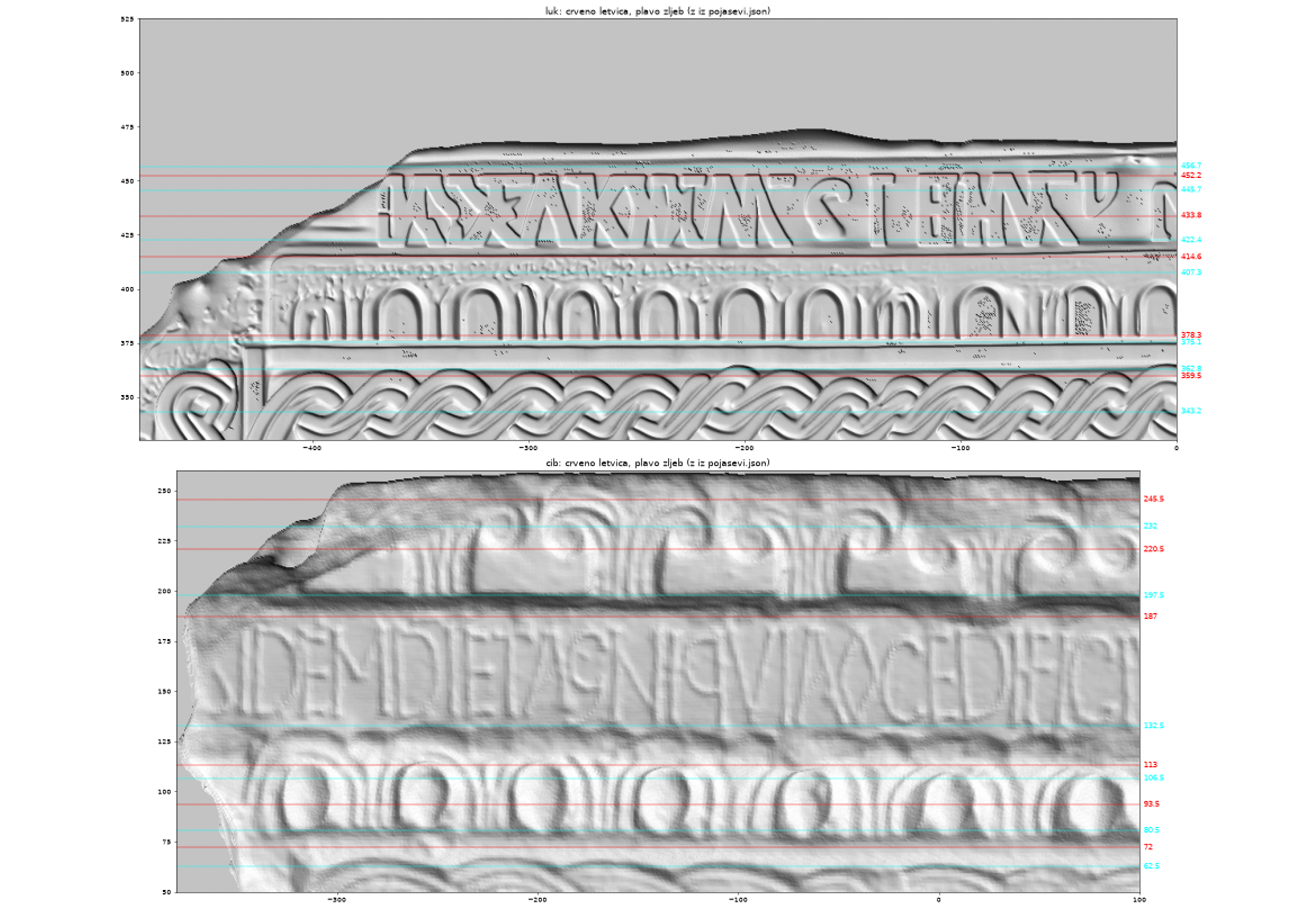
The model was compared with the scan band by band. The band boundaries match, but the drawing of the ornament and letters is not a copy of the real stone — the correlation of the drawing with the scan is close to zero. The inscription on the model is therefore neither read nor interpreted. An attempt to set the arch’s size from the ornament spacing gave scales that disagree with each other, so no true size is given.
The model shows the form and layout of the decoration; for measurements and the inscription, the 3D scan of the ciborium fragment is authoritative.
Technical drawing
 Open PDF (A3) ↓
Plates from the documentation
Literature and sources
- „Dosije: Ulcinjski ciborijum u Beogradu“, Portal Analitika, 04.09.2017 — https://www.portalanalitika.me/clanak/279538--dosije-ulcinjski-ciborijum-u-beogradu